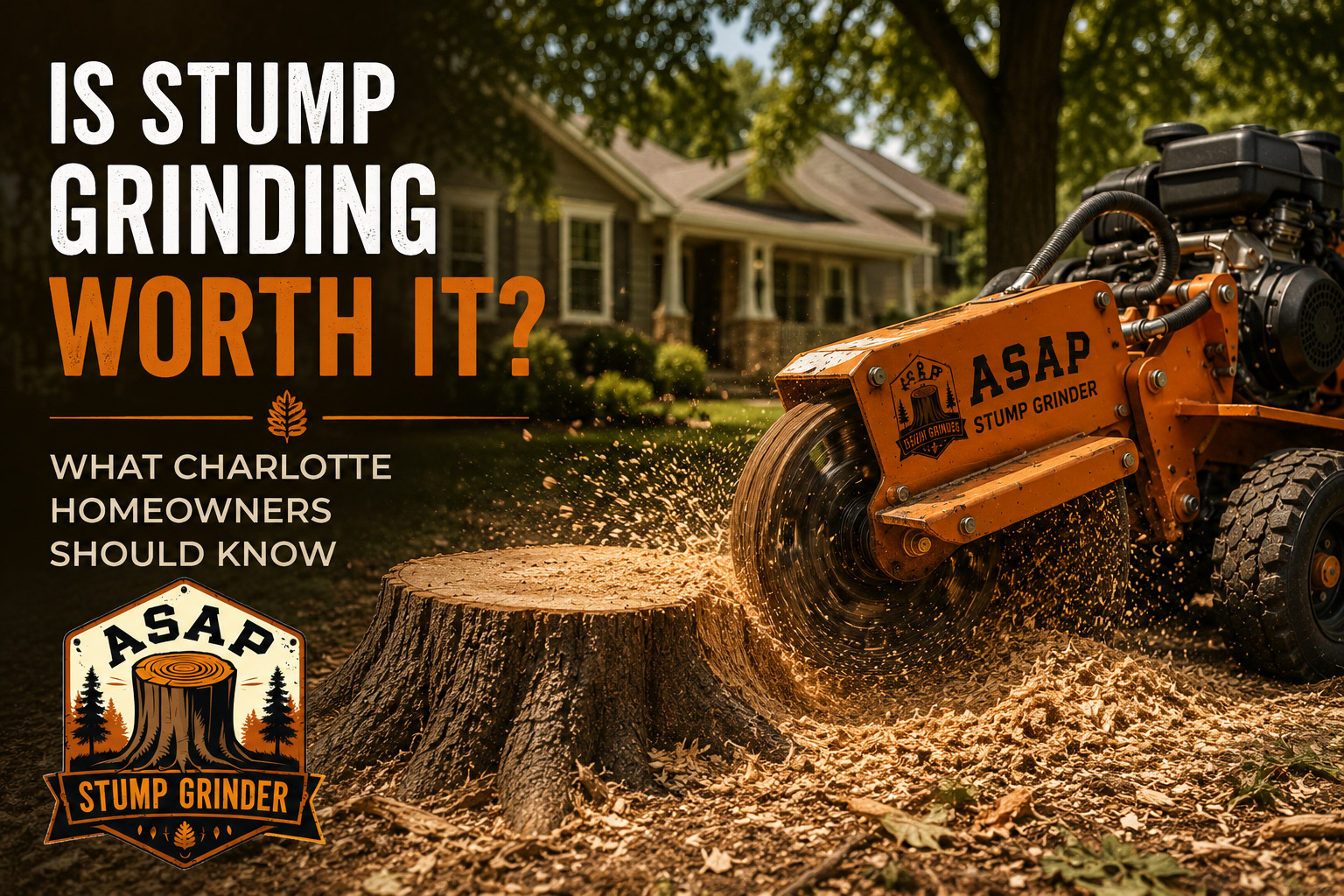
Is Stump Grinding Worth It? What Charlotte Homeowners Should Know
A Stump That Stays Put Is Never Really Free
You had a tree removed, and now there's a stump sitting in your yard. It's not going anywhere on its own, and every time you mow around it, trim around it, or step over it, you're reminded it's still there. The question most Charlotte, NC homeowners eventually ask is whether paying to have it ground out is actually worth it — or whether ignoring it is a reasonable long-term plan.
The honest answer isn't just about the cost of the grind. It's about what the stump is quietly costing you while it sits there. This post breaks down the real value of stump grinding so you can make an informed call.
What Stump Grinding Actually Does
Stump grinding is not the same as stump removal. Removal pulls the entire root ball out of the ground, which is invasive, disruptive, and expensive. Grinding uses a rotating cutting wheel to shred the stump down to several inches below soil level, leaving behind a pile of wood chips and a clear, flat patch of ground.
Once ground, the remaining chips decompose over time. The area can be filled with topsoil, seeded with grass, or landscaped however you choose. The process itself is fast — most residential stumps are handled in under an hour — and leaves minimal disruption to the surrounding yard.
In Charlotte, NC, where mild weather means the yard gets used year-round, a stump that restricts lawn space or creates a hazard isn't a problem you can comfortably defer indefinitely.
Why Charlotte Homeowners Decide Stump Grinding Is Worth It
Property owners in Charlotte, NC come to this decision from different starting points. Some are tired of mowing around an obstruction. Others are planning a landscaping project that can't move forward with the stump in place. Here are the four most common reasons the math tips toward grinding.
It Ends the Ongoing Lawn Damage
A stump forces constant mowing detours. The exposed roots at the base regularly catch mower blades, causing equipment damage and leaving uncut patches of grass. Over a full mowing season, the time and wear add up — and none of it goes away until the stump does.
Surface roots that extend across the yard compound the problem. They create tripping hazards for children and guests, crack pavement over time, and can damage irrigation lines or lift walkway edges. Some homeowners add root chasing to their grinding service specifically to address roots that have spread well beyond the stump base.
It Removes a Pest and Regrowth Risk
Decaying wood draws wood-boring insects, termites, and carpenter ants. Once a colony establishes in a stump, it doesn't stay there — it migrates. Stumps within fifteen to twenty feet of the house are a meaningful pest risk. In Charlotte, NC, where warm, humid conditions support year-round insect activity, a softening stump near the foundation is exactly the kind of thing pest control professionals flag during inspections.
Certain tree species — oak, elm, and sweetgum among them — also produce aggressive sprout regrowth from the stump base. Those sprouts pull nutrients from the remaining root system and are difficult to keep cut back. Grinding the crown eliminates the source.
It Clears the Space for Actual Use
Whether the plan is a garden bed, a patio, extended lawn, or simply a clear path to walk, stump grinding is the step that makes it possible. A ground stump is no longer an obstacle — it's just ground.
In practical terms, professional landscapers, fence installers, and grading contractors in the Charlotte, NC area routinely require stump removal before they begin site work. Leaving the stump in place doesn't delay the problem — it delays the project behind it.
It Protects and Improves Curb Appeal
A visible stump in the front yard reads as deferred maintenance to buyers, appraisers, and neighbors alike. Charlotte, NC real estate agents consistently cite exterior condition as a first-impression factor. For homeowners who may sell in the next few years, grinding the stump removes a negotiating point before it appears on an inspection report.
Even for homeowners with no near-term plans to sell, the change is noticeable. Removing a stump is one of those improvements that looks obvious in hindsight.
When Waiting Is a Reasonable Choice
Stump grinding is worth it in most situations, but there are cases where waiting makes sense. A stump in a back corner of the property with no planned use, no pest risk, and no effect on lawn maintenance is a low-urgency item. The same is true if a landscaping project that would require clearing the area hasn't been funded yet.
The calculation shifts quickly, though, if the stump is near the house, in a high-traffic area of the yard, or already showing signs of softening, regrowth, or insect activity. In those cases, every month of delay typically increases the eventual cost and the damage done in the meantime.
Frequently Asked Questions
Can I grind a stump myself with a rented machine?
Rental stump grinders exist, but they are significantly less powerful than professional equipment. They can handle small stumps but often struggle with large-diameter wood or deep roots. The rental cost, fuel, physical effort, and time — plus the risk of kickback or equipment damage without experience — closes the gap with professional pricing faster than most homeowners expect.
Will stump grinding kill the roots that are already in the ground?
Grinding does not chemically treat the roots. Lateral roots that extend underground will decay naturally once the crown and taproot are removed. This takes years but does not typically cause surface problems — unless you're replanting directly over the footprint, in which case a deep grind is the right service.
How soon after tree removal should I have the stump ground?
There is no required waiting period. Fresh stumps actually grind more easily than older ones, which dry out and harden over time. Scheduling promptly also closes the window of pest attraction and regrowth that opens up once the tree is cut.
Does stump grinding damage nearby grass or garden beds?
The grinding process produces chips that spray into the immediate area. An experienced operator positions the machine to minimize spread and works around nearby plantings when possible. Remaining chips can be raked back and used as light mulch or composted.
Does stump grinding require a permit in Charlotte, NC?
Stump grinding does not typically require a permit. Stump removal by excavation can in some cases require one, depending on the scale and proximity to utility lines. Grinding avoids that complexity entirely.
The Bottom Line for Charlotte Homeowners
For most Charlotte, NC homeowners, stump grinding is worth it. The combination of restored lawn usability, eliminated pest risk, cleared space for landscaping, and improved property appearance delivers real value that compounds over time. Ignoring the stump isn't a neutral choice — it's a choice with ongoing and increasing costs.
ASAP Stump Grinding provides professional stump grinding across Charlotte, NC for residential and commercial properties. If a stump is affecting your yard, call (704) 975-0325 to schedule an assessment or get a quote.
