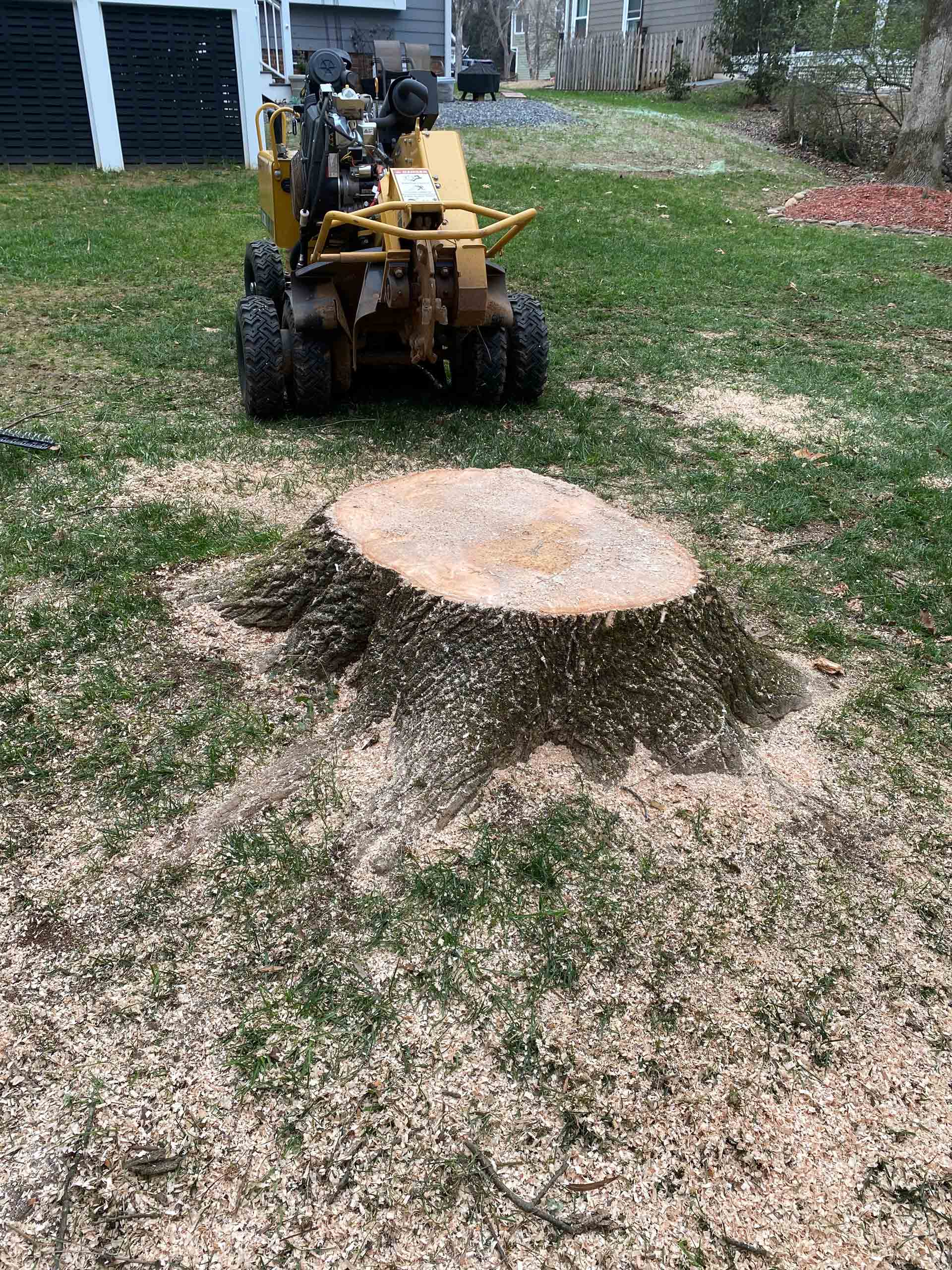
Is It Cheaper to Grind Multiple Stumps at Once?
Introduction
If you have more than one tree stump on your property, it’s natural to wonder whether it’s better to remove them one at a time or all at once. Many homeowners assume pricing is fixed per stump, but that’s not always how it works.
In reality, stump grinding is often more efficient when handled as a single project. For properties in Charlotte, NC, where yards can vary in size and layout, combining multiple stumps into one service visit can make a noticeable difference in overall cost.
This guide explains when and why it’s cheaper to grind multiple stumps at once—and when it might not make as much of a difference.
Why Multiple Stumps Can Cost Less Per Stump
Grinding several stumps in one visit reduces repeated setup and travel time, which are built into most service costs.
Instead of treating each stump as a separate job, contractors approach the entire property as one project. This allows them to work more efficiently, reducing downtime between tasks and making better use of equipment already on-site.
Because of this, the cost per stump often decreases when multiple stumps are handled together.
Where the Cost Savings Come From
There are specific reasons why combining stumps into one job can lower overall costs. These savings come from how the work is organized and completed.
Reduced Travel and Setup Time
Every stump grinding job includes time spent getting to the property and setting up equipment.
Travel time is only charged once
Equipment setup happens at the start of the job
No need to return for separate visits
This eliminates repeated overhead costs.
Continuous Workflow on Site
Once the grinding begins, it’s more efficient to move from one stump to the next without interruption.
Machines stay in operation
Operators work without restarting the process
Less downtime between stumps
This steady workflow helps reduce labor time.
Better Equipment Efficiency
Stump grinding equipment performs best when used continuously.
Fewer starts and stops
More consistent operation
Less repositioning across separate visits
This contributes to faster completion and lower cost per stump.
Comparing Single vs Multiple Stump Jobs
Understanding the difference between separate jobs and combined projects helps clarify the pricing advantage.
While the total cost increases with more stumps, the price per stump typically decreases.
When Grinding Multiple Stumps Is Most Cost-Effective
Combining stumps is not always equal in savings. Certain conditions make it more beneficial.
Open Access Properties
When all stumps are easy to reach, the contractor can move quickly between them.
Minimal repositioning
Faster workflow
Lower labor time
Stumps Located Close Together
Clusters of stumps are easier to handle in one session.
Less machine movement
Reduced time between tasks
Greater efficiency overall
Similar Stump Sizes
When stumps are similar in size, the grinding process is more consistent.
Predictable workflow
Balanced time allocation
Easier job planning
When Cost Savings May Be Limited
There are situations where grinding multiple stumps doesn’t significantly reduce costs.
Difficult Access Between Stumps
If stumps are spread out or located in separate areas with limited access, the contractor may need to reposition equipment multiple times.
Large Variation in Stump Sizes
A mix of very large and very small stumps can affect efficiency, especially if one stump requires significantly more time than the others.
Complex Surrounding Conditions
If some stumps are near structures, slopes, or obstacles, the additional care required can reduce the overall efficiency of the job.
How to Decide If You Should Grind Stumps Together
If you’re planning stump removal, a simple evaluation can help you decide whether to combine the work.
1. Count the Number of Stumps
If you have more than one stump, it’s usually worth considering a single project.
2. Look at Their Locations
Check how close the stumps are to each other and whether they’re easy to access.
3. Consider Future Plans
Think about what you want to do with the space.
Landscaping projects
Lawn restoration
Construction preparation
Completing all stump grinding at once can help prepare the entire area more efficiently.
4. Request a Combined Estimate
Instead of asking for individual pricing, request a quote for all stumps as one job. This gives a clearer picture of potential savings.
FAQs About Grinding Multiple Stumps
Is it always cheaper to grind multiple stumps at once?
In most cases, yes. Combining stumps into one project reduces setup and travel costs, lowering the price per stump.
Do contractors charge per stump or per project?
Many contractors consider both. While size still matters, pricing often adjusts when multiple stumps are included in one job.
Does stump size still affect pricing when grouped together?
Yes. Larger stumps will still require more work, but grouping them with smaller ones can balance the overall cost.
Can I leave some stumps for later to save money?
Leaving stumps for a separate visit may increase total cost because it requires another setup and service call.
Is it better to remove stumps before starting landscaping?
Yes. Grinding all stumps at once helps create a clean, consistent surface for any future landscaping work.
Conclusion
Grinding multiple stumps at once is usually more cost-effective because it reduces repeated setup, travel, and labor time. While the total cost increases with more stumps, the price per stump typically decreases when the work is done as a single project.
For property owners in Charlotte, NC, combining stump grinding into one visit is often the most practical approach, especially when preparing for landscaping or clearing space. Working with a focused provider like ASAP Stump Grinding ensures the job is handled efficiently, making the most of both time and cost.
