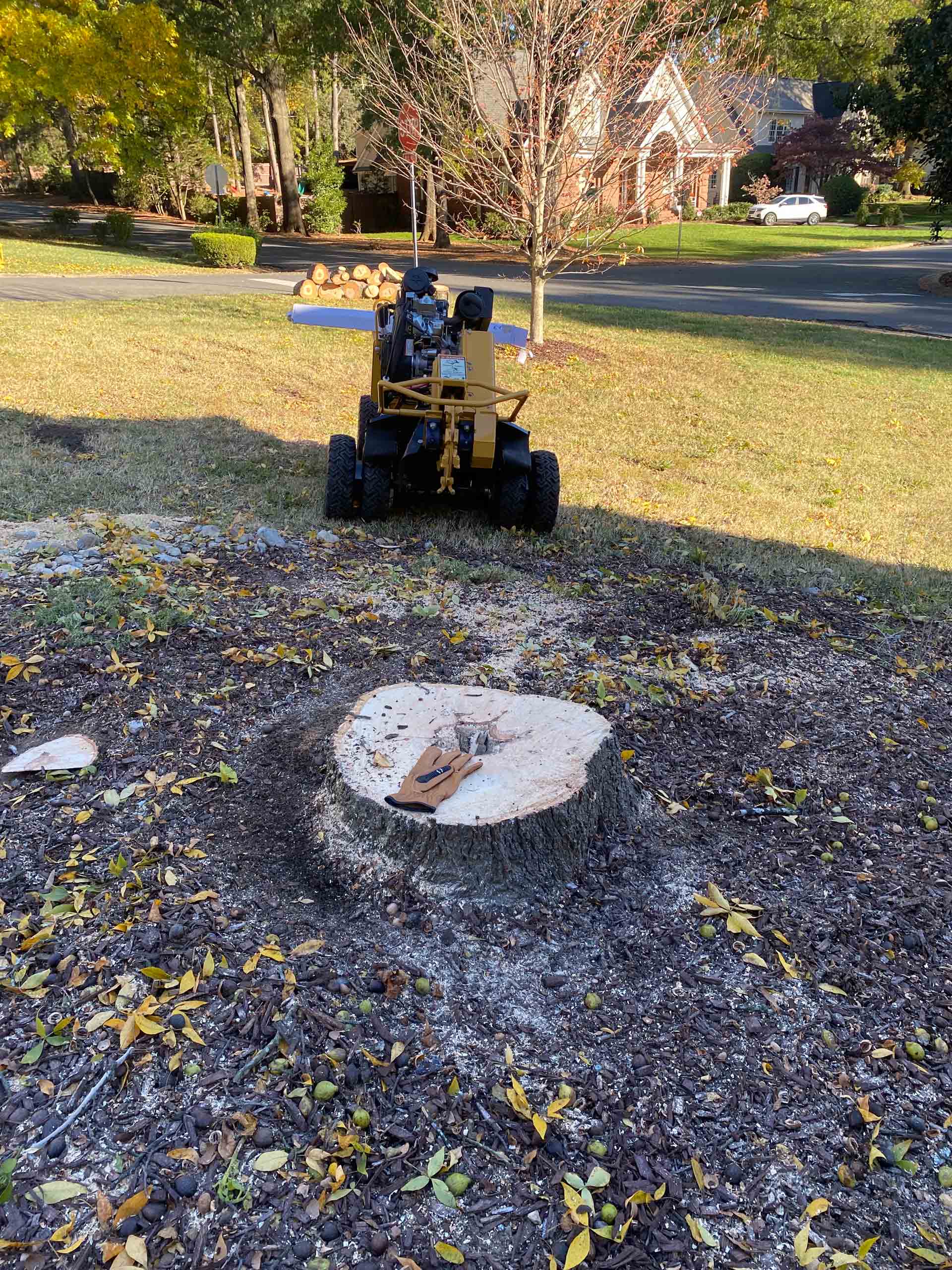
How Does Stump Size Impact Grinding Price?
Introduction
When it comes to stump grinding, one of the first things that affects pricing is size. It’s also the factor most property owners notice right away. A small stump in the corner of a yard will almost always cost less than a large one left behind from a mature tree—but the difference in price isn’t always as simple as it looks.
In Charlotte, NC, where properties range from compact residential lots to larger landscaped yards, stump size plays a major role in determining how much work is required. Understanding how size impacts grinding price helps you better estimate costs and plan your project more effectively.
Why Stump Size Matters in Pricing
Stump size directly affects how long the grinding process takes and how much effort is required. The larger the stump, the more material needs to be removed below ground level.
Grinding isn’t just about shaving off the top layer. The machine works through the entire stump structure, gradually breaking it down into mulch. As size increases, so does the time, machine wear, and overall complexity of the job.
This is why stump grinding is commonly priced based on diameter rather than a flat rate.
How Stump Size Is Measured
Before any estimate is given, contractors need a consistent way to measure stump size. This ensures pricing is fair and reflects the actual scope of work.
Measuring Diameter at Ground Level
The most common method is measuring the stump’s diameter across its widest point at ground level. This includes:
The visible trunk base
Any root flare extending outward
Irregular edges that increase total width
This measurement forms the baseline for pricing.
Why Diameter Matters More Than Height
Stump height doesn’t significantly affect grinding cost because the visible portion is removed quickly. What matters more is:
The width of the stump
The underground structure
The spread at the base
A short but wide stump can cost more to grind than a tall but narrow one.
How Size Impacts Grinding Effort
Larger stumps require more than just extra time. They change how the entire job is approached.
Increased Machine Passes
Grinding a stump involves moving the machine back and forth across the surface. With larger stumps:
More passes are required
Each layer takes longer to remove
The grinding head covers a wider area
This directly increases labor time.
Greater Depth Coverage
As diameter increases, so does the volume of material below ground.
Wider stumps often extend deeper
More wood must be ground below soil level
Larger root flares require additional work
This adds to both time and machine usage.
Higher Equipment Demand
Large stumps often require:
More powerful grinding machines
Extended operation time
Increased fuel and wear on equipment
These factors contribute to higher overall pricing.
Comparing Small vs Large Stumps
Stump size affects pricing in a predictable way, but it’s helpful to see how different sizes compare.
While this gives a general idea, actual pricing can still vary depending on other factors like access and root systems.
When Size Isn’t the Only Cost Factor
Although stump size is important, it doesn’t work in isolation. Other conditions can amplify or reduce its impact.
Situations Where Size Has Greater Impact
In some cases, size becomes even more significant when combined with:
Dense hardwood species
Extensive root systems
Deep grinding requirements
These factors make large stumps more complex to handle.
Situations Where Size Has Less Impact
There are also cases where size doesn’t dramatically increase cost, such as:
Open areas with easy machine access
Minimal surrounding obstacles
Standard depth grinding only
In these scenarios, even larger stumps can be handled efficiently.
How to Estimate Price Based on Stump Size
If you’re trying to estimate the cost of stump grinding, size is a good starting point. Following a simple process can give you a rough idea before requesting a quote.
1. Measure the Diameter
Use a tape measure to find the widest part of the stump at ground level. This gives you the base measurement used for pricing.
2. Check for Root Flare
Look for roots extending outward from the base. Include these in your measurement if they increase the overall width.
3. Consider Accessibility
Even with a large stump, easy access can reduce the overall cost. Check if equipment can reach the area without obstacles.
4. Define the End Use
Think about what you want to do with the area after grinding. Deeper grinding for replanting or construction can increase costs, especially for larger stumps.
5. Compare Multiple Stumps
If you have several stumps of different sizes, grouping them into one job can improve overall efficiency and reduce cost per stump.
FAQs About Stump Size and Grinding Costs
Does a bigger stump always cost more to grind?
In most cases, yes. Larger stumps require more time, effort, and machine work, which increases the cost.
How is stump size measured for pricing?
Stump size is typically measured by diameter at ground level, including any root flare.
Does stump height affect the price?
Not significantly. The visible portion is removed quickly, while the underground structure determines most of the effort.
Can a small stump ever cost more than a large one?
Yes, if the small stump is in a hard-to-reach area or has complex root systems, it can cost more than a larger stump with easy access.
Is it cheaper to grind multiple stumps of different sizes?
Yes. Combining multiple stumps into one project often reduces the overall cost per stump.
Conclusion
Stump size is one of the most important factors in determining grinding cost, but it’s not the only one. Larger stumps require more time, more machine effort, and often more complex handling, which naturally increases pricing. However, accessibility, root systems, and project goals also influence the final cost.
For homeowners in Charlotte, NC, understanding how size impacts pricing makes it easier to plan ahead and avoid unexpected costs. Working with a focused provider like ASAP Stump Grinding ensures each stump is handled based on its actual size and conditions, resulting in efficient and practical stump removal.
